Business games for companies in Denmark
Business games for international teams
A programme in Denmark starts with the company’s work question. The country defines the location and logistics; the scenario follows from the group, purpose and available time.
An example programme brief
Consider this conditional request: sustainability, finance, procurement and operations leaders are selecting a portfolio of initiatives. The tension is that some projects create a quick effect, while others require partnerships and influence several measures at once. The client needs to compare stakeholder interests, available resources and commitments to partners. This conditional example shows how to structure a work-focused brief for an international team.
Why The City for Life fits the question
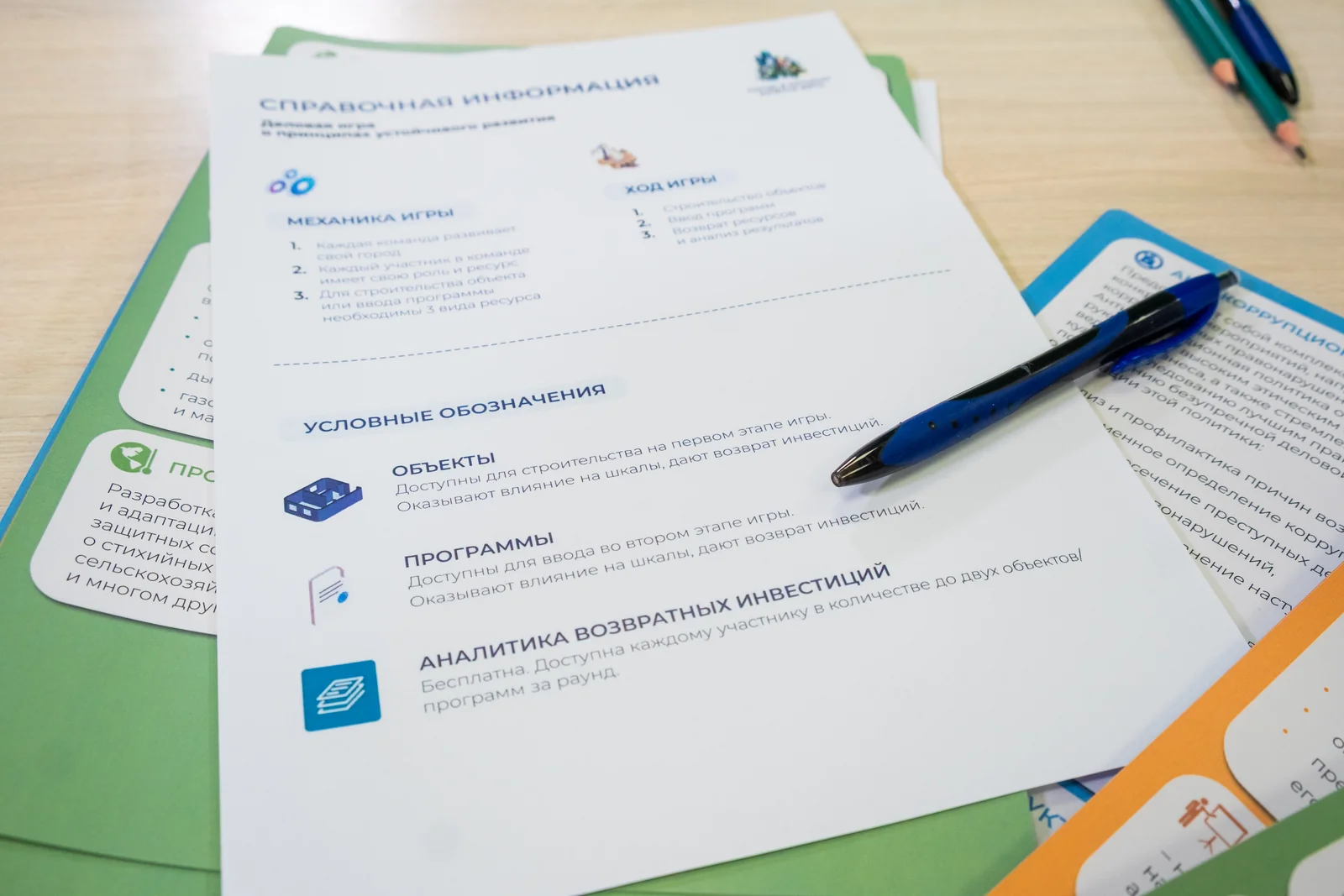
In this game, government, business and resident roles allocate different resources around environmental, social and governance indicators. The mechanic brings the precise point where the roles in the brief must exchange information, negotiate or decide into the discussion. Edges is a better alternative when the central question shifts, because teams negotiate partnerships, track reputation and respond when commitments are broken. The choice therefore depends on the action the team wants to examine after play.
What to give the trainer before the session
Preparation only needs a neutral map of the roles and tension in the brief: sustainability, finance, procurement and operations leaders are selecting a portfolio of initiatives; some projects create a quick effect, while others require partnerships and influence several measures at once. The scenario does not require internal documents or client data. The trainer connects observations from play to the work question in the brief, while the organiser names the person who will record the final agreements. This keeps the discussion practical: participants refer to specific decision moments, and the follow-up has a clear owner.
What work output to record
The output can be a one-page working agreement on the issue in the brief. The roles in the brief name the information owner, a joint decision point and an escalation signal. The three debrief questions test the draft from different angles: the initial choice, a missed dependency and the action after the meeting. The document then becomes the agenda for the team’s next work conversation.
Session structure and timing
Reserve 2.5–4 hours for The City for Life, following the game’s technical parameters. Within that window, the organiser allows for instructions, game rounds and a trainer-led debrief. Before the programme, confirm participant numbers, in-person or online delivery, internet access and devices where the mechanic requires them. If the group has a different time window, adjust the game or the brief instead of reducing the debrief to a token ending.
Three questions for the debrief
- Which interest was absent from the first decision?
- Where did one resource constrain the whole system?
- How will the team revisit a partnership commitment?
After answering, the team records one observation, one work agreement and one owner for the next step. This gives the session a clear continuation at work.
What to include in the request
Provide the country, estimated participant number, roles in the group, work question, format and language. Russian / Ukrainian, English, German and Spanish are confirmed; other languages must be discussed. Current pricing and conditions appear on the selected game page. Venue, equipment, catering, team travel and other logistics are agreed separately.