How to choose a business game for your team: goals, group, language and duration
Business Life runs business games for teams across Europe, the UAE, Georgia and Kazakhstan. Start with a short brief. Define what the team needs to discuss or practise, how many people will attend, which language they use at work and how much time the agenda allows for play and debriefing. Choose the title and storyline after these four points are clear.
Turn the purpose into a working objective
No single game covers every team issue. A change scenario should let managers choose an approach and see how employees respond. A game about information flow needs to distribute different pieces of a task across the group. A motivation workshop benefits from a simulation with limited resources and competing priorities.
Write the objective as an observable action: “compare approaches to implementing change”, “examine how departments share information” or “discuss what drives our motivation decisions”. During play, the team can notice how people debate choices, share initiative, respond to mistakes and agree the next step.
Match the mechanics to the objective
- Change. Right the Helm uses four rounds and connects decisions to ADKAR, the change formula and employee response types.
- Incomplete information. In Black Square, participants combine separate observations into one answer and a different captain leads each round.
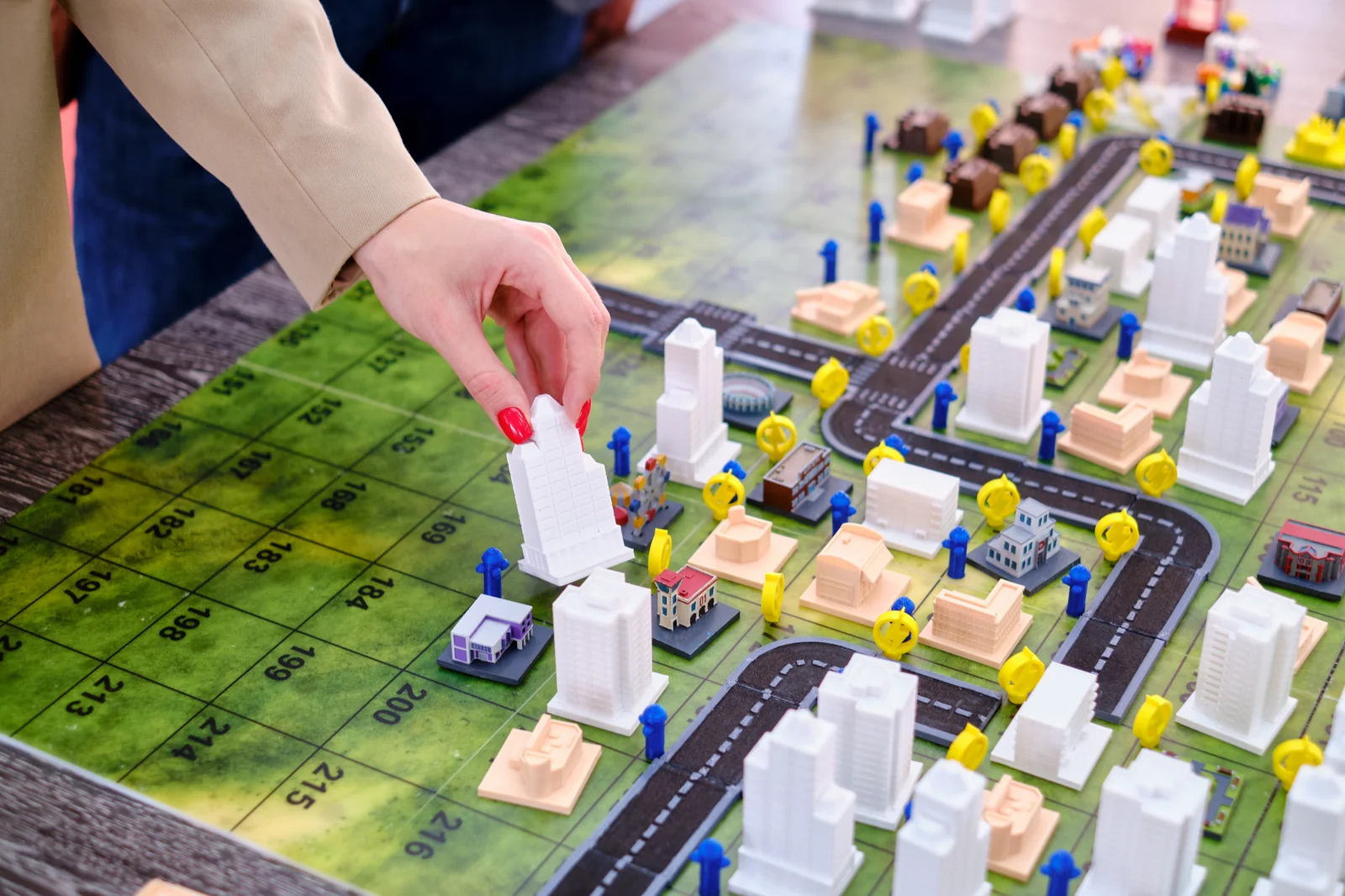
- Systems and strategy. Big City asks teams to manage an urban system, while The City for Life can run in person, online or in a hybrid setting.
- Motivation. Incentive Space Simulation runs for four to eight hours and leaves room for a detailed review of choices.
Check the group size and composition
Plan around confirmed attendance rather than total headcount. The portfolio includes formats for a small management team and for a large conference audience. Right the Helm supports 8–50 people. Black Square supports 4–150. Edges can take up to 120, while Big City and the space simulation can take up to 150.
Tell the organiser who will be in the room and how they work together. Managers and specialists will bring different views of the task. The debrief can examine who opened the discussion, how the group handled disagreement and which working agreements should continue after the session.
Confirm the working language
The language affects instructions, materials and pace. Choose one shared language for an international team or arrange interpretation before confirming the format. Consecutive interpretation adds time and interrupts round timing. State the language required for the facilitator, materials and group discussion so the provider can confirm the available version.
Count the debrief as part of the session
Do not squeeze a long simulation into a short programme slot. Black Square needs 1.5–2.5 hours and Edges needs 1–3 hours. Big City takes 3–4 hours, Right the Helm 4.5–5 hours and The City for Life 2.5–4 hours. Confirm whether the stated duration includes the debrief for your session. Allow separate time for registration, room changeovers and technical setup.
| Decision | What to put in the brief | Why it matters |
|---|---|---|
| Objective | One question or skill to examine | Connect purpose to mechanics |
| Group | Minimum, maximum and roles | Plan teams and materials |
| Language | Facilitator, materials and discussion | Confirm the game version |
| Time | Net session window and agenda position | Protect the debrief |
Review the business games catalogue, shortlist two formats and send the organiser your brief. To check the choice against your group and programme, send an enquiry.